Showing Posts From
Peru 2026
-
 Steve McCracken
 - 23 May, 2026
Building the Team and Learning to Share
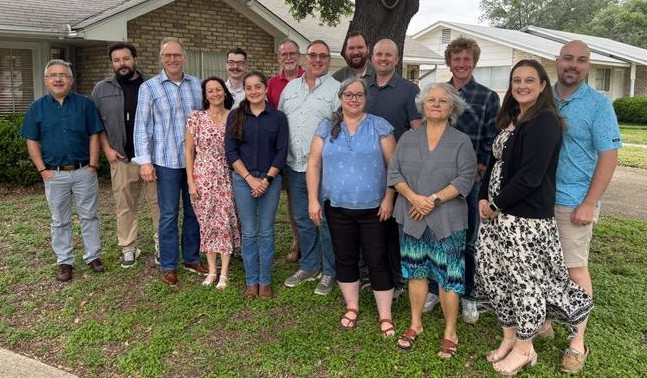
We had our May team meeting this past weekend and it was good to get together again as a team while we work through the administrative items needing to be completed. This time was augmented with our sharing lunch around the tables getting to know each other better as well as having our mission partners, the Blocks, with us. We spent the time learning more about what we might be doing down in Peru (even though plans aren't completely concrete yet) and nuances on sharing the gospel in that context. The Details: Not Just Administrivia As mentioned before, a mission trip involves its fair share of paperwork necessary for the trip going smoothly. We spent some time ensuring that everyone is on track with the needed administrative items—making sure everyone has authorized the needed background checks and that everyone’s travel profiles and passports are submitted. It’s the necessary side of missions even if we'd rather skip over it to just get to the trip itself. We also started the "packing list" conversation. It’s becoming very real when you’re discussing which battery-operated fans will survive the Peru heat, finding the right power adapters, or remembering to pack eye protection for the dusty truck rides through the mountains. We even touched on cell phone options to ensure we can stay in touch. From Theory to Practice: The 3D Gospel and Orality After lunch, we had a short discussion on what we learned reading The 3D Gospel (you can read my review of the book in my previous post). If you have read my review, you know that I wouldn't recommend the book, but that doesn't mean we can't learn from it. While I might disagree with how the author proposes to solve the problem he raised, it does present how we may need to better understand cultures we may encounter and gives us "a leg up" on understanding situations we might encounter without having to learn it on our own through experience and time. We then moved from the "theory" of cultural worldviews into the "practice" of one of the ways we will be sharing the gospel while there. Meredith Block led us in a session on Orality. In the communities we will be visiting, information and truth aren't primarily passed through books or written documents, but through oral tradition—storytelling. This is especially true for the leaders and those who would be pastors in those communities. If we want the Gospel to take root, we have to learn to share it in a way that fits the "oral" heart of the community. The Story We Are Telling As part of this training, we had been asked to begin looking at Matt. 25:14-30, but in the spirit of the global church working together, we found out that another group will be in the area before us and will be sharing a different story from Acts 19 and won't be able to share with all the community. So, we will change to that same passage to be able to continue what they will have started. So, this new passage our team has been given for an assignment is Acts 19:13-20. We are asked to learn the story by memory and practice telling/teaching it and asking leading questions afterward to facilitate the engagement and learning. It’s an interesting story about spiritual authority and the power of the name of Jesus--but not just the name as a ritual or magic phrase, the name used from within a relationship with the true person behind the name. What’s also interesting is how this story links with the "Fear-Power" worldview presented in The 3D Gospel. It’s not just a hypothetical situation anymore; it’s addressing the reality of spiritual forces around us and showing that spiritual authority isn't just a formula, but comes from a genuine relationship with Jesus. Learning to tell this story accurately from memory and being ready to engage with the questions and discussions afterwards will be a challenge but we are excited to do it.How You Can Partner With Us This WeekPray for us: As we learn the story of Acts 19, that it would sink into our own hearts before we share it with others. Participate with us: Read Acts 19:13-20 and then close your Bible and try to tell the story from memory to someone close and see how much you are able to share (and learn)! Pray for the logistics: For the final pieces of paperwork and the practicalities of packing to come together without stress. Pray for the Yanesha people: That God would already be preparing the hearts of those who will hear these stories this summer. Pray for those we encounter along the way: That God would have us ready to share with those we meet along the way.Thank you for your continued support and for being part of this journey with us! If you aren't already on our team and feel led to support this mission, you can find all the details and a link to donate on my trip page: steve-in-peru.themccrackens.org.
- Steve McCracken
- 06 May, 2026
Book Review: The 3D Gospel
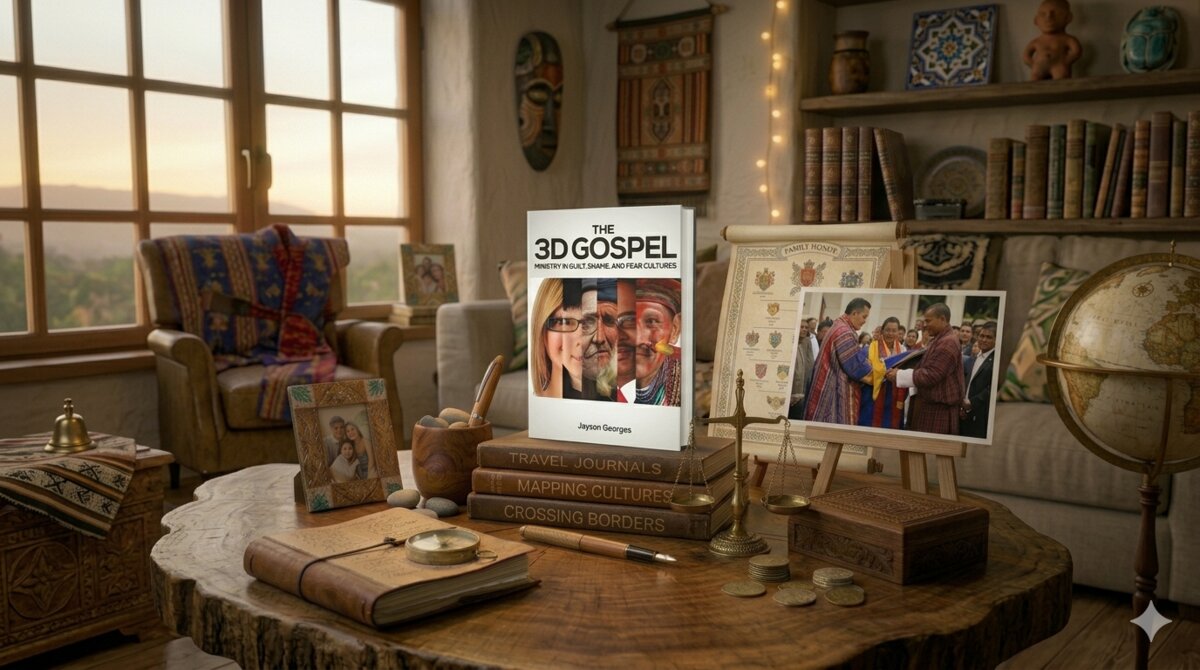
As mentioned in my last post, as preparation for the upcoming trip, as a team we have been asked to read through the book "The 3D Gospel" by Jayson Georges. I mentioned I'd put in my review of the book as my next post, so here it is. I'll probably put in a follow-on section in the next post after the team discussion at our next group meeting. The 3D Gospel The book has the premise that the Gospel is too often shared using the predominant worldview of the Western World and that the rest of the world also known as the "Majority World" doesn't understand the presentation due to their culture having a different worldview. The author, Jayson Georges, developed these insights during his time in Asia. Since then, he has expanded on this framework through various books, lectures, and teaching engagements. What is "3D" Georges uses an illustration of a diamond and most only seeing one facet of the diamond. The three cultures that the subject of the book revolves around are:Guilt-Innocence: This is the primary culture and worldview in the Western world. This cultural viewpoint focuses on the law and forgiveness emphasizing the pursuit of justice and righteous living. Shame-Honor: This is a dominant culture in the East and would be characterized by a focus on inclusion and restoration of status. The people work to live with honor and avoid shame (on them or groups to which they belong). Fear-Power: This culture has a focus on spiritual forces and how to be protected from their powers. This is found primarily in tribalistic groups. The people work to appease or dominate the forces through rituals or superstitious practices.With this framework set, the book moves to show how to spread the message of the Gospel in each culture since a presentation shared from a different cultural perspective won't be grasped. Book Overview Georges introduces the whole idea through an illustration of someone from Central Asia who became a Christian after hearing a presentation from the perspective of guilt and innocence but then continued to act from a Shame/Honor or Fear/Power context. From this introduction, he concludes that the person needed to be saved from shame and fear and not only guilt. The Three Cultures He states that the guilt/innocence cultures are primarily focused on rules and laws that define right and wrong--that this is taught early and internalized in each person to know right and wrong. A person is defined by his actions. With shame/honor cultures he draws an equivalence to collectivistic cultures (focused on community). Shame and honor are how the group regards you. It's more a matter of who one is and not what one does. People are taught to maintain harmony and that they are an interdependent part of the whole. In a fear/power culture, he states that the focus is to appease the capricious spiritual powers rather than on morals or ethics. This is done usually through amulets, charms, and rituals. One wants to be in harmony with the spiritual forces around in order to live well. He finishes the section with an illustration on how one might get to a destination through accessing a map, asking people, or avoiding spiritually dangerous places. Contextualizing the Gospel After explaining the three types of cultures he then pivots to how one might contextualize the Gospel in each one.Culture Type Core Question Main NeedGuilt-Innocence Am I right or wrong? ForgivenessShame-Honor Am I worthy or unworthy? Honor/AcceptanceFear-Power Am I safe or in danger? Power/VictoryFor the guilt/innocence culture, Georges presents the familiar story focusing on God's holiness, sin as transgression, the Law, and Jesus as the sacrifice for forgiveness and righteousness. For the shame/honor culture, the story is different. God is the honorable King and was shamed in the fall. Jesus left his honor and came as a lowly human to save people from shame and restore dignity. Jesus endured the shame of the cross breaking its power restoring God's honor and removing our shame. For the fear/power culture, the narrative focuses on power. Adam disobeyed and put humanity under the kingdom of Satan. Jesus came to initiate God's kingdom and restore God's sovereignty and his followers power and dominion in his kingdom. Jesus' Death and the Cross As Jesus' death and resurrection are central to the Gospel, how does this specific event look for each culture? For the fear/power perspective, humans are enslaved and can't just get stolen back from Satan's power. Jesus paid a ransom of his life for Satan to release his authority but, as Jesus was not liable to death, he eluded Satan's control and liberated the human race. For the shame/honor perspective, humans have dishonored God and are incapable of satisfying their honor debt. Jesus was able to fully honor God and eliminated the need to exact punishment for the shame brought on. The ultimate purpose of the cross was to restore God's honor and repairs our face before God. For the guilt/innocence perspective, God's being holy and just requires that transgressions need to be punished. To forgive without punishment would be unjust. The death on the cross pays the debt of the transgressions and satisfies the requirement for punishment and allows us to be forgiven and declared righteous. My Thoughts One can tell that Georges is from a Western culture and has some experience in Eastern cultures and not much in animistic or tribal contexts as his sections on the Fear/Power groups is the smallest part without as much detail or discussion. Surprisingly, though, I would say that the section on Shame/Honor of which he puts himself forward as an expert with his website and lectures is the weakest and where he needs to stretch things to fit his premise. First Impressions To be honest, I had a hard time reading through this even though it is a short book. The logical jumps, inconsistencies, and stretching of ideas kept jumping out at me making it hard to follow the flow.He uses the Apostle Paul's preaching and writing as examples of guilt/innocence but then also says that the cultures in biblical times were primarily shame or fear based. He says that shame is most deeply about a person's being as opposed to guilt focused on what has been done, but then has all the examples of shame being some action that was done. He draws an equality between guilt worldview and individualistic cultures and between shame and collectivist cultures (and leaves fear cultures out). While there may be overlap, these seem to be different axes. He probably needs to do this though, as many of the examples in the shame sections are around community and collectivist norms rather than just shame itself. He started out talking about those in the West or from the guilt/innocence cultures doing a disservice by only showing one facet of the "diamond" (Gospel), but then goes on in the gospel presentations to build up three different narratives--one for each worldview. It seems he's falling into the same trap that he's arguing against and presenting three different "1D" Gospels rather than one coherent "3D" gospel. While he does state that all groups are a mixture of cultures and the Gospel being more than just guilt/innocence focused, he seems to add it as a caveat to any critique since he then goes right back into his main arguments for ministry in the one cultural worldview of whichever culture one might be in. In order to keep with his framework, he has some parts that seem theologically "off". Did Adam's sin in the garden shame God? Did God really lose face? Did God lose sovereignty when Satan rebelled? Is sin really just something that brings shame?Further Reflections To really wrap things up, I probably wouldn't recommend this book. I think it probably started with good intentions, but there is really something strongly missing here. He draws the theology and ministry from sociology and seems to force fit the message into the sociological framework. He talks about the Gospel being 3D and having all aspects, but then when presenting the theology or ministry to a certain group, presents his "1D" view that fits that culture. This is where I differ greatly from Georges. I have an issue when Georges presents his three "1D" gospels, trying to make the message fit the culture. While I would agree that we need to understand the culture where we minister and would agree that the Gospel can address the different cultures. Georges uses Ephesians and Genesis (the fall in the garden) to show that there is guilt, shame, and fear that are addressed. He started out criticizing the Western presentation of the gospel with a focus on guilt and innocence as not being adequate for other cultures, but then seems to push the ministry in the other cultures to only be one-dimensional as well. I would say that, while we may use cultural language and norms to gain a hearing, the presentation needs to show all aspects of the gospel and not only the one facet that is easiest for each culture to see. When Adam sinned, he was guilty of disobedience AND felt shame AND was fearful. People in individualistic cultures can feel shame or fear. There is not an equivalence between guilt/individualistic or shame/collectivist cultures either. God holds each person guilty and calls us individually. He calls us to commune with him and with each other in community. He holds believers as forgiven, bestows honor as we honor him, and calls us into the spiritual battle.

- Steve McCracken
- 01 May, 2026
Preparation: Ourselves, Our Team, and the Details
As we look toward our departure for Peru, and specifically Villa América, this July, the mission is becoming more of a daily reality. Preparation for the trip is a process. It’s not just about hopping on a plane and arriving; it’s about preparing ourselves and inviting our community to become part of the extended team along with ensuring every small detail is handled. This month, we are focusing on the following areas: 1. Ourselves: Learning to see in "3D" We aren't just packing our bags and going; we are trying to make an impact for God's kingdom. In order to make us more effective, we need to see where our worldview might have blindspots. So, our team is currently reading and will be discussing "The 3D Gospel" by Jayson Georges. The premise of the book is that we, coming from a Western context, naturally view the Gospel through a lens of Guilt and Innocence. However, much of the world—including many indigenous communities—views the world through the lenses of Honor and Shame or Fear and Power. In reading through this book, the hope is to learn how to communicate the Good News in a way that the people of other worldviews are able to understand it in their context. The Good News of the Gospel isn't only good news for Western Cultures but is applicable in other contexts as well. I hope to have a short review of the book in the next post here. 2. Our Team: Building the Foundation A mission trip is never a solo endeavor. Right now, we are in the vital phase of building our extended support team. I am reaching out to friends and family to join me through prayer and financial partnership. I’ve been encouraged by the conversations I’ve had so far. While I have done this before while in Ecuador, that's been a while and my circle is quite different now. While only a few of us are traveling to the Amazon rainforest, it's good to know that we are sent by a larger community. If you’ve been praying for us or considering a gift, thank you for joining with us in the work this summer. 3. The Details: Safety and Stewardship Then there are the practical details that make the ministry possible. This month is one where we are going through the tasks needed to get us there. Does everyone have insurance that covers one while outside the country? Are we willing to sign the group covenant to be a part of the team? Who doesn't already have background checks done since we will be working with children? While some of this might seem a little overboard for a short term mission trip, it's necessary in this day and age. This also shows that we can go with the covering of the church and organization that our mission partners are under.How You Can Partner With Us This WeekPray for our "3D" perspective: That our team would have humble hearts as we learn to see the Gospel through new cultural lenses and understand what blindspots we might have. Pray for the logistics: That the background checks and insurance details would be completed smoothly. Financial Support: Each person is still working toward the goal of $2,500 to cover travel and ministry projects.If you feel led to support this mission, you can find all the details and a link to donate on my trip page: steve-in-peru.themccrackens.org. Thank you for standing with me as we prepare to serve the Yanesha people!
- Steve McCracken
- 14 Apr, 2026
Welcome to the Mission Trip Blog
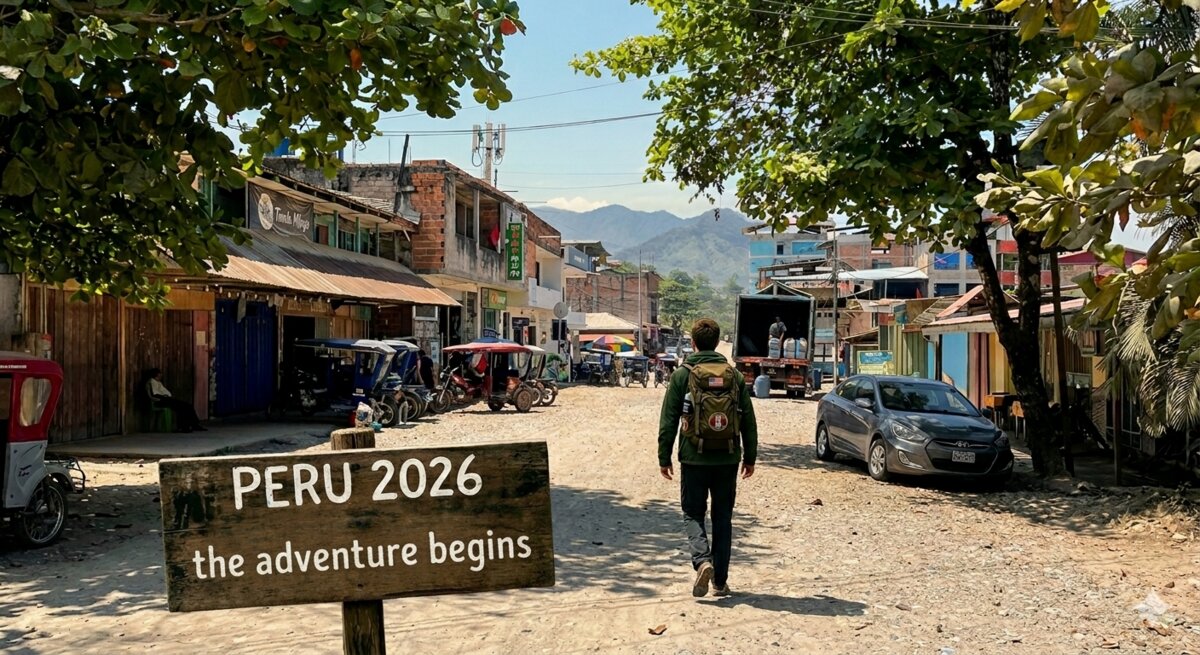
Exciting news — our Peru mission trip is officially getting underway! Our team is beginning to come together, and over the next few months we’ll be preparing, praying, and raising support for this trip. Check back here for updates as we take these first steps and share more about what’s ahead. I should add a quick note here that some of the images on the site will have AI used to build the image. This picture is an example where the picture is from Peru, but the sign and the person with the backpack have been put in using image generation.